Indexed News on:

--the California "Mega-Park" Project

Tracking measurable success on preserving and connecting California's Parks & Wildlife Corridors

READ OUR EDITOR ON FACEBOOK: facebook.com/rex.frankel

Monday, April 21, 2008

-----
Senator Feinstein introduces legislation to create funding for cleanup of abandoned mines


By Izzy Martin, The Sierra Fund, 4-17-2008

http://www.sierrafund.org/news/8-News/263-Feinstein%20AML%20cleanup

Last month, Senator Feinstein introduced S.2750, a bill that modifies the requirements applicable to mining activities minerals on public domain lands, and creates a funding stream for cleanup of abandoned mines. Currently, there is no source of revenue for the cleanup of abandoned hard rock mines. Among other things, this bill would impose a royalty payment on all mining products, like the one now imposed on coal mining. The fund will be used for the cleanup of sites that were mined for minerals like gold, silver, copper, lead and precious gems.

Hard rock mining companies are the only major mining sector not currently required to pay royalties to the federal government for the removal of minerals from public lands – even though the industry is experiencing near record high gold prices, around $900 per ounce. In 2000, the Bureau of Land Management (BLM) estimates that $982 million in hard rock minerals were taken from public lands – and the industry paid no royalties for those minerals. By contrast, companies that extract coal, oil, and natural gas from public lands and waters pay royalties that range between 8 - 12.5 percent. This is because the federal laws that regulate gold and silver mining operations were established by the 1872 Mining Law – and they have not been updated since.

The bill would direct several sources of revenue for the cleanup fund, including reclamation fees for all new and existing hard rock mines – modeled after a similar program for the cleanup of abandoned coal mines. The bill would also impose royalty payments for new and existing hard rock mines on federal lands, as well as increase transaction and maintenance fees for hard rock mining operations.

This funding source would be used to help close the estimated 500,000 abandoned mines in the United States. As reported in The Sierra Fund's newly released report Mining's Toxic Legacy: An Initiative to Address Mining Toxins in the Sierra Nevada, there are over 47,000 abandoned mines in California. (Download a copy of the report here.)

According to Senator Feinstein, Abandoned mines in California and across the country pose a serious threat to public safety and health. Minerals from the mines have already begun to pollute our drinking water, crops and fish. And abandoned mine shafts endanger public safety. It’s clear that something must be done to clean up these hazardous mines. The problem is that we lack a reliable and steady stream of funding – and the scope of the cleanup effort is enormous. That’s why I’ve introduced a bill to create an abandoned mine cleanup fund. The bill establishes several sources of revenue to pay for the cleanup, including royalty payments and reclamation fees. We’ve seen that a similar program has helped to fund the cleanup of abandoned coal mines – and I believe that this is a sensible solution for the hard rock mining industry.”

The bill would reform the 1872 Mining Law in a number of ways, including:

Creating an Abandoned Mine Cleanup Fund to be used to clean up and restore land and water resources adversely affected by past hard rock mining activities, including habitat cleanup and restoration.

Establishing spending priorities for the cleanup fund, based on the severity of the risk to public health, public safety, and the impact on natural resources. These priorities are similar to those included in the House-approved mining legislation (see next article for details on the House bill).

Directing the Secretary of Interior to create an inventory of abandoned mines on all Federal, State, tribal, local and private land. Once the inventory is complete, the Secretary is instructed to provide cleanup funding according to the spending priorities listed above.

Establishing three sources of revenue for the Abandoned Mine Cleanup Fund, including a reclamation fee of 3% of on all hard rock mineral mining; a 4% royalty on existing operations and 8% royalty on new operations that extract minerals from federal lands, and increased maintenance fees.

According to a press release sent by the Senator, the measure is intended to be one part of the comprehensive mining reform debate expected to occur in the Senate later this year. It states that Senator Feinstein is also supportive of efforts to reform mining law more broadly.

The bill has been referred to the Committee on Energy and Natural Resources. The full text of this bill can be found here.

Abandoned Mines in Sierra Nevada Conservancy service region
(compiled from information developed by CA Department of Conservation, Abandoned Mine Lands Unit)

County

Number of Abandoned Mines

Alpine

102

Amador

316

Butte

257

Calaveras

586

El Dorado

553

Fresno

605

Inyo

9,698

Kern

4,498

Lassen

434

Madera

213

Mariposa

973

Modoc

297

Mono

2,519

Nevada

366

Placer

747

Plumas

477

Shasta

637

Sierra

520

Tehama

121

Tulare

262

Tuolumne

697

Yuba

65

-----
Study backing more water exports to Southern California is nullified


A judge says the report failed to account for effects on endangered salmon and steelhead trout.

By Eric Bailey, Los Angeles Times Staff Writer
April 17, 2008
http://www.latimes.com/news/printedition/california/la-me-salmon17apr17,1,1938847.story

from http://earthjustice.org


SACRAMENTO -- A federal judge Wednesday invalidated a plan that justified boosted water exports from Northern California, ruling that it failed to account for the effects on endangered salmon and steelhead.

U.S. District Judge Oliver W. Wanger of Fresno found that a 2004 study by the National Marine Fisheries Service didn't adequately address global warming, the loss of habitat and other factors that could hurt the fish.

But the effect of his 151-page opinion on water exports for farms and Southern California cities won't be decided until further court hearings starting late this month.

"This decision should prove very big for the fish," said Michael Sherwood, an attorney with Earthjustice, a nonprofit law firm representing commercial and recreational fishermen, environmental groups and the Winnemem Wintu tribe of Mount Shasta.

Wanger's ruling is the second setback in the last year for federal biologists and California's water managers. In August, the judge ordered a shift in operations that could cut water exports from the Sacramento-San Joaquin River Delta by 30%.

The decision comes days after federal regulators canceled the 2008 salmon fishing season because of a sharp decline in the Sacramento River's fall-run chinook salmon, the backbone of the commercial industry.

Wanger's decision addresses an ongoing crisis for two other chinook salmon species, the winter and spring runs, and Central Valley steelhead trout. Once collectively numbering in the millions, the three endangered fish have seen their populations plummet -- in the case of the winter-run chinooks to fewer than 200 returning adults in 1994. The fish have been hit hard by water pollution, predators and dams that have blocked spawning grounds and boosted river temperatures.

Though the judge's decision might further curb delta exports, a more likely result is operational changes 250 miles to the north at Shasta Dam, experts on both sides said.

Cradling the state's biggest reservoir, the dam traditionally releases most of its water down the Sacramento River and onward to the delta in late summer and fall. But environmentalists have pushed for more cold-water releases to help the struggling runs of salmon and steelhead.

Sherwood of Earthjustice said the ruling could mark "a turning point" in operations by the state and federal water projects, which redid the California landscape in the 20th century to move water from the wet north to farms and communities in the south.

Jeff McCracken, a spokesman for the U.S. Bureau of Reclamation, which operates Shasta Dam as part of the federal water project, said it was too soon to decipher the decision's fallout.

"There will be no impacts until the judge tells us we have to do something differently," he said. "At this point we haven't gotten there."

Laura King Moon, assistant general manager of the nonprofit State Water Contractors, said the ruling underscored the importance of the Bay Delta Conservation Plan, an effort underway in Sacramento to spotlight ways to heal the delta while fixing the water delivery system.

"We can't continue to have the water system of our state remain at the mercy of every individual endangered species," she said. "We need a comprehensive plan."

Lester Snow, state Department of Water Resources chief, agreed that the ruling was "further evidence that the delta is teetering on the brink of collapse," noting that Gov. Arnold Schwarzenegger had proposed a slate of solutions.

Among the fixes being eyed is construction of the long-debated Peripheral Canal, which would divert water around the delta and onward to Southern California. The proposal has been condemned by environmentalists and others who say it would rob the delta of the water it needs for fish to survive.

This spring's dry weather has already cut state water reserves. The Metropolitan Water District, the state's largest, is calling on residents to step up conservation efforts such as not watering their lawns one day a week.
-----
2 stories:
Sprawl is closing the gap between cities and suburbs across Northern, Calif., putting a strain on the environment.

Growth Control Victories in the North SF Bay
--------------------

Creeping sprawl overtakes refugees from cities

By Rachel Gordon, San Francisco Chronicle, 4-18-2008

http://www.sfgate.com/cgi-bin/article.cgi?f=/c/a/2008/04/18/BA0GVRQLO.DTL&type=green

Fed up with the encroaching sprawl, Linda Jimenez fled Silicon Valley for Tracy in 1990 in search of more affordable housing and the small-town way of life of her Santa Clara County youth. Eventually, the sprawl caught up.

In 1990, Tracy, a friendly agricultural community separated from the Bay Area by the Altamont Pass, had fewer than 34,000 residents. Today, the mushrooming town, located at the western gateway to the Central Valley, has a population nearing 81,000.

The town sits as a symbol of the quest by working- and middle-class Bay Area residents to find housing they can afford - a pursuit that often draws them further from the traditional job centers in San Francisco, Oakland and San Jose.

The result: A swath of residential and retail development that reaches toward the Sierra foothills, into the agricultural heartland of the Central Valley and south toward Salinas on land once reserved for ranching, farming and recreation.

The migration comes at costs to the environment: loss of natural habitat, increased greenhouse gases and a growing strain on the watershed.

"Sprawl is an inefficient and unsustainable use of our land resources," said Elizabeth Adam, spokeswoman for the Bay Area Open Space Council. "It is often the default pattern of development that solves short-term problems but has very negative effects on communities over time."

Just drive along major highways between Richmond and Auburn (Placer County), between Dublin and Manteca (San Joaquin County), between San Jose and Salinas and between Sacramento and Stockton, and the change is evident, with strip malls, office parks and cookie-cutter housing projects dotting the landscape.

"The cities and suburbs of Northern California are increasingly growing together," Gabriel Metcalf and Egon Terplan noted last year in a San Francisco Planning and Urban Research Association report on the development trend they wrote. "Growth has outstripped the traditional nine-county Bay Area and has leapt north, south and east, joining with Sacramento and its suburbs."

The Bay Area's population, now estimated at 7.2 million, is projected to grow to 8.7 million by 2030, according to the California Department of Finance. But the population growth in the Bay Area's 12 neighboring counties - among them San Joaquin, Sacramento, Stanislaus and Santa Cruz - is projected to add even more people. By 2030, according to the state forecast, they will have 6.6 million residents, an increase of 2.1 million.

One of the chief problems is that the jobs have not been keeping up with the trend, forcing more people to endure long commutes.

"Between 1980 and 2000, the number of commuters from 12 neighboring counties into the Bay Area's nine-county core nearly quadrupled from 30,000 to 117,000 daily," Metcalf and Terplan found. "Given that the vast majority of commuters were driving alone, nearly 90,000 new cars were added to already-congested roadways from trips alone."

Vehicle emissions account for half the greenhouse gas emissions in California.

Jimenez, who works for Cal State East Bay, spends more than 2 1/2 hours a day in her car, driving back and forth between her home in Tracy and her job in Hayward. For a while, she took public transit - a mixture of BART and buses to reduce her carbon footprint - but that nearly doubled her commute time. She switched back to driving, but bought a less environmentally damaging hybrid car.

Despite the long commutes, Jimenez, 57, doesn't regret her decision to leave the Bay Area.

When she purchased her first home in Tracy in 1990, she paid $154,000 for a spacious, three-bedroom, two-bathroom house. Fourteen years later she sold it for more than $400,000 and traded up for about $100,000 more to a five-bedroom, three-bath house with a large yard that she shares with her daughter, son in-law and grandchildren. Finding a house that size and at that price in the Bay Area, in a place as nice as Tracy, she said, would be difficult.

"I agree it's not the ideal situation, but we like the community and have established roots here," Jimenez said.

San Joaquin County, where Tracy is located, has undergone a major transformation in the past decade and a half. An estimated 115,196 acres of open space and agricultural land have been "urbanized," or developed for commercial and residential use, according data kept by the state Department of Conservation.

Statewide, an estimated 538,273 acres were developed between 1990 and 2004, or 38,448 annually. Nearly two-thirds of the development was on land once used for agriculture.

Between 1849 - the start of the Gold Rush - and 1990, an average of 20,052 undeveloped acres were urbanized annually.

Unless restrictions are placed on new development, an estimated 2.1 million acres in California, much of it supporting crops and grazing, is at risk of sprawl development, according to the American Farmland Trust, a national preservation group.

The loss of open space has altered California's economy and ecosystem.

"We're losing migration corridors for animals and compromising our watersheds and paving over productive farmland," said Amanda Brown-Stevens, field director for Greenbelt Alliance, a Bay Area land conservation and urban planning organization.

The challenge, she said, is getting people to value long-term sustainability more than short-term profit. If they won't do it on their own, then land-use laws can be enacted to prevent landowners and builders from developing open space.

Across the country, local jurisdictions have adopted urban-growth boundaries aimed at curtailing sprawl. In the Bay Area, such limits have been enacted in approximately three dozen cities and counties, from Morgan Hill to St. Helena. Vacaville, as part of a legal settlement with conservationists, was the latest to limit growth.

Greenbelt Alliance (http://greenbelt.org) has calculated that 401,500 acres of open space lands in the Bay Area could be developed in the next 30 years, with the growth hot spots centered along Interstate 80 in Solano County, eastern Contra Costa County, the East Bay's Tri-Valley area, Coyote Valley in southern Santa Clara County and Highway 101 in the North Bay through Sonoma County.

Brown-Stevens said the demands of population growth and the search for affordable housing can't be ignored. However, she said, there are development options that are less harmful to the environment than building on remote open lands.

One such option, she said, is the construction of compact residential developments with a mix of condos, single-family homes and apartments in cities. Ideally, they would be near stores and job centers and have easy access to public transit to make it more convenient for people to get around without driving.

But convincing people that the American Dream can be found in an urban neighborhood where sometimes the only open space is the back stoop or the neighborhood playground won't be easy.

Still, Brown-Stevens suggested that the time is right to make the argument.

"I think people are sick of traffic," she said, "and they do care about the issue of global warming, and they do want to spend more time with their families and spend less time in their cars."

----------------

Victory: Pittsburg City Council rejects flawed hillside ordinance!
On Monday April 8, Pittsburg's City Council rejected a flawed hillside ordinance and sent it back to the city planning staff to completely redo. Greenbelt Alliance and local residents have been working for a full year to get the Planning Commission to create an ordinance that truly protects the hills instead of opening them up for grading and sprawl development. This is a major victory and an important opportunity to protect these iconic East Bay hills.


Success: Vacaville adopts urban growth boundary!
On Tuesday March 25, the City Council in Vacaville, one of Solano County's fastest-growing cities, unanimously adopted an urban growth boundary! The petition for the boundary was signed by 10,000 Vacaville residents (more than voted in the last election). The boundary defines where growth should and should not occur, and will protect thousands of acres of farmlands and hills around the city.

-----
Fate of California Condor in The Balance


The clock is ticking down to April 25, the deadline set by the U.S. Fish and Wildlife Service for comments from the public regarding what should be included in the analysis of Tejon Ranch Company's request for an "incidental take permit" to kill or harass the California condor and 33 other endangered and threatened species.

By Lynn Stafford

the Frazier Mountain Enterprise, April 18, 2008

http://mountainenterprise.com/atf.php?sid=2758&current_edition=2008-04-18


David Clendenen spoke in a dynamic and sobering program this month, telling about his fifteen years with the Condor Recovery Program as a biologist with the U.S. Fish and Wildlife Service

Clendenen is resource specialist at The Wildlands Conservancy's nearby Wind Wolves Preserve, but he spoke for himself at the event hosted April 5 by the Condor Group of the Sierra Club.

Eloquently and precisely, he discussed the history of the California Condor, its current status and future challenges. His exceptional photographs helped provide an overview exploring the uncertain future for this great but imperiled creature, the largest flying land birds in North America.

Condors are huge scavengers with nine and a half foot wingspans, roaming great distances in search of food. They live long lives, up to 75 years, have traditional ways and complex social structures passed from generation to generation.

They breed slowly, an average of one chick every two years. They are intelligent, curious, able to learn quickly, and are more flexible in behavior than hawks and other raptors. Yet by 1982, there were only twenty-two of these magnificent birds left on earth.

The factors that have brought them to the brink of extinction are all directly related to the activities of people.

First was the development of ranch lands in the West. The large carcass-producing hoofed animals like deer and elk that roamed through California were replaced by domesticated cattle. Predators, such as grizzly bears, coyotes and mountain lions were killed using poisoned bait, which also poisoned condors and other scavengers during the late 1800s and early 1900s. The practice was made illegal in the mid-1900s. But loss of habitat, direct shooting and lead poisoning combined with the condors' slow reproductive cycle, starting the downward spiral.

During the 1980s lead poisoning from hunters' bullets was documented as a source of mortality in condors. It had undoubtedly been a serious cause of mortality ever since Europeans arrived with guns and began hunting large animals. Fragments of bullets are ingested as condors feed on the carcass of an animal that has been shot. Lead is a powerful toxin that causes neurological damage and often death. It only takes a piece the size of a fingernail clipping to kill a condor. Less than that can cause neurologic damage that affects the big birds' ability to navigate in the air.

In the 1980s, the wild population was dwindling dangerously low. Zoos had learned how to raise young at an accelerated rate. So the last few wild birds were captured and brought into zoo programs to build their populations up. Slowly, captive-reared birds began to be reintroduced during the 1990s into Southern California and northwestern Arizona. They are tagged, monitored and partially fed with lead-free carcasses of still-born dairy calves.

At first, the condors' intelligence and natural curiosity was a problem. They learned to identify with people, and appeared to be attracted to them and their settlements as a potential source of food, as residents of Pine Mountain remember from a few years ago.

Since then, rearing and release techniques have improved. Released birds are acting more like wild animals.

A new problem, dubbed "microtrash," has emerged since the reintroduction of captive- reared condors began in the 1990s.

Condors are curious. They are attracted to small bits of trash such as pop tops, bottle caps and various broken bits of glass and plastic. Historically, parent condors feed small pieces of bone to their chicks. The minerals are useful to the chicks' growth. It is thought that microtrash is given mistakenly as bone. Scientists have confirmed that this has led to the deaths of several chicks while still in the nest.

The wild population of this ancient creature is now just 155 birds in three different populations in California, Arizona and the northern peninsula of Baja, Mexico. Progress is being made to bring the species back from the edge of extinction. Chicks are being successfully hatched and raised in the wild. The species is not yet fully-independent with self-sustaining populations in the wild, but the threat of extinction is no longer an eminent danger. Great strides have been made to treat this species as a national treasure.

Continuing problems with diminishing habitat, reduced food supplies, the presence of lead, other toxins and microtrash persist. An excellent example of the future uncertainty for the condor is right here in our own region's Tejon Ranch. Tejon Ranch Company (TRC) is a real estate development and management company that controls 272,000 acres. The land's developers often identify it as "the largest contiguous holding of private property in California." The area also contains some of the best traditional foraging habitat for the California condor.

It is good news that TRC recently banned lead bullets from its hunting programs. Bravo! However, TRC is currently firming up plans for at least three large-scale housing and commercial developments, including a sprawling upscale ranchette-type community to be called Tejon Mountain Village. This plan will greatly impact the condor, which for thousands of years has used the warm updrafts from the slopes which are part of the proposed development to launch its long glides across the valleys, watching for food.

At the present, a Multi- Species Habitat Conservation Plan for the Tehachapi Uplands is being developed by Tejon Ranch Company. Though the title speaks of conservation, the document is a required preliminary in TRC's petition for the grant of an Incidental Take permit for the condor. This kind of permit to incidentally kill a condor in the course of TRC's future developments has never been granted.

Such a permit would be a very dangerous precedent for endangered species in the United States. At least one condor, a matriarch mother dubbed "AC8" by the scientists in the recovery program, has already been shot by a hunter on a Tejon commercial hunt. This bird, about 40 years old, was one of the last of those wild survivors brought into the recovery program during the 1980s.

She hatched several chicks, then was released back into the wild. Her deep knowledge of the roosting and foraging areas of this region was especially important to be transferred to the juvenile condors for their survival in the wild. Her death was a profound loss to the California condor recovery program.

---------------------
Center for Biological Diversity: Tejon Ranch Seeks License to Kill California Condors
Development Would Destroy Proposed National Park

By: Center for Biological Diversity

http://yubanet.com/california/CA-Op-Ed-Center-for-Biological-Diversity-Tejon-Ranch-Seeks-License-to-Kill-California-Condors.php

Los Angeles, March 26, 2008 - The U.S. Fish and Wildlife Service announced a proposal today to allow the Tejon Ranch Company to kill and harass the iconic and extremely endangered California condor. The condor's last bastion of wild habitat is threatened by mega-developments in northern Los Angeles and southern Kern counties, planned by the Tejon Ranch Company, a publicly traded company heavily invested in by New York-based funds. Tejon Ranch Company is also seeking a permit to kill and harass 33 other rare species, including our national icon, the bald eagle.

"No corporation should ever request, no government agency should ever consider, and no person should ever approve a permit like the one proposed today," said Adam Keats, director of the Urban Wildlands Program of the Center for Biological Diversity. "This รข€˜license to kill' would be a knife to the heart of the California condor and would destroy California's rich natural heritage by enabling more urban sprawl to be dumped in southern California's most valuable remaining wild areas."

Conservation groups have a different vision for Tejon Ranch: Tejon-Tehachapi Park. "Tejon Ranch is a true gem of California and can never be replaced," said Ileene Anderson, staff biologist at the Center. "Once these cities are built, there will be no way wildlife can move up and down the state anymore. Coupled with the hit that condor and the other rare plants and animals will take, this would be one of the greatest environmental travesties California will ever face."

Tejon Ranch covers over 270,000 acres of wilderness at the crossroads of northern and southern California. The Mojave desert, the southern Sierra Nevada mountains, the great central valley and the southern forests all converge on Tejon Ranch - the only place in California where four ecoregions come together. The diversity of plants and animals that occur on the Tejon Ranch is exceptional. Several of the rare plants and animals that Tejon Ranch Company is seeking permission to harm are only known from Tejon Ranch, and have no where else to live.

Besides the California condor, Tejon Ranch is a refuge for a host of wildlife and plants threatened by the proposal, including five other species declared by the state of California to be "fully protected": the bald eagle, American peregrine falcon, golden eagle, white-tailed kite, and ringtail (the condor is also fully protected). Other species in the permit request include the least Bell's vireo, southwestern willow flycatcher, Valley elderberry longhorn beetle, western yellow-billed cuckoo, Tehachapi slender salamander, little willow flycatcher, tricolored blackbird, California spotted owl, Tehachapi pocket mouse, burrowing owl, yellow-blotched salamander, western spadefoot, purple martin, northern goshawk, coast horned lizard, Cooper's hawk, yellow-breasted chat, prairie falcon, northern harrier, long-eared owl, two-striped garter snake, round-leaved filaree, Fort Tejon woolly sunflower, Kusche's sandwort, Tehachapi buckwheat, American badger, striped adobe lily, and Tejon poppy.

"Barely 100 condors fly free in California, and only about 50 near Tejon, the historical heart of their range," said Keats. "They simply cannot withstand a single death, nor can they withstand the loss of habitat that this permit would enable. As the condor goes, so goes what makes California special. It's simple: the ranch cannot be developed - not one shovel should touch dirt, not one McMansion should be built. Anything less will be a failure that will be mourned by generations to come."

Preserving Tejon Ranch as a new national or state park would protect a bounty of native plant and animal communities, cultural and historic features, and scenic vistas.

See http://www.savetejonranch.org.

Sunday, April 20, 2008

-----
Two Court Battles Over the Headwaters Forest:
Judge orders mediation in Pacific Lumber case

The Eureka Times-Standard
4/19/2008

http://www.times-standard.com/localnews/ci_8982517?source=rss


The U.S. Bankruptcy Court judge overseeing the Pacific Lumber Co. case ordered Friday that key creditors should go through mediation to resolve their differences over how the company should be restructured.
Corpus Christi, Texas, Judge Richard Schmidt ordered two days of mediation just prior to hearings that -- if the parties cannot strike a deal -- would determine which of two plans would go forward. The timber noteholders, backed by a bid by Beal Bank, are competing with a plan by Marathon Structured Finance Fund and the Mendocino Redwood Co.

Schmidt directed the trustee for the noteholders, Beal Bank, Marathon and Mendocino Redwood to participate in talks under a mediator, U.S. Bankruptcy Judge Marvin Isgur. Papers outlining the different positions should be in to Isgur by April 23, and the mediation is set for April 25 and 26.

Palco's own plans for reorganization have effectively been sidelined.

The noteholders want to put Palco subsidiary Scotia Pacific's 210,000 acres up for auction, and Beal Bank has put forward an offer of $603 million. A representative of Beal on Thursday said he did not want to go through mediation, and would rather direct talks with other creditors.

Mendocino Redwood believes the timberlands are worth less than that, and are putting up $500 million -- but it is also planning to run the Scotia mill. Schmidt wants the two parties to work out an agreement.

-------------------------

California Supreme Court Hears Challenge to Pacific Lumber Logging Plan on May 5th

Oral argument in the Headwaters litigation is scheduled before the California Supreme Court on Thursday, May 8 at 9:00 a.m. at the State Building, located at 350 McAllister Street San Francisco in thecourtroom on the 4th floor. The 1999 Headwaters Deal, while promisingto ensure sustainable forest practices and protection of fish andwildlife resources, did just the opposite. Since the deal was inked, EPIC and the Sierra Club have pursued litigation challenging its state approvals, including the Sustained Yield Plan, a state Incidental Take Permit, and a Streambed Alteration Agreement. We won in the trial court, and are now asking the California Supreme Court to uphold that decision. Meanwhile, Pacific Lumber's unsustainable practices have forced it to bankruptcy. This case is critically important to how forestry is practiced in California, for protection of California's timber, water and wildlife resources, and to require agencies to maintain their obligations under the law. This is true no matter what happens in the Pacific Lumber's bankruptcy. We are the first case on the calendar for that day. Generally it is a good idea to get there atleast a half hour early, as you have to go through separate securitybefore entering the court room, and the courtroom may be crowded.

scott@wildcalifornia.org

http://my-earth-log.blogspot.com/2008/04/ef-329-earths-tree-news.html

-------------------------------

Forest Defense Camp set for May 2 - May 9

http://arcatareporter.blogspot.com/2008/04/forest-defense-camp-set-for-may-2-may-9.html

-----------------

Pacific Lumber Timber Plan Threatens State Park
http://www.wildcalifornia.org/actions/number-67

In a slick move to liquidate Redwoods along the South Fork of the Eel River, Pacific Lumber is moving quickly to get approval for a huge Timber Harvest Plan (THP) immediately adjacent to Humboldt Redwoods State Park. The Railcar THP 1-08-008 Hum would liquidate mature forests along the park border, just above the Avenue of the Giants. This area, encompassing the middle portion of the Bridge Creek watershed, has been proposed as a park addition in the proposal that The Nature Conservancy and Save-the-Redwoods League have put forward to resolve the Pacific Lumber bankruptcy.

-------------------------

Charles Hurwitz Expresses Sadness Over His Purchase of Pacific Lumber:

http://www.chron.com/disp/story.mpl/business/steffy/4494014.html

Article titled: "It seems like Charles Hurwitz just can't catch a break"

"For his part, Hurwitz has paid a hefty price for his ownership of Palco.

"This is the root of all evil for us," he said. "Everything that's bad in my business life has come out of this.""

http://www.chron.com/disp/story.mpl/business/steffy/5685563.html
Factor in the recent housing slump and Palco is in bad shape. So is Maxxam. Palco was Maxxam's biggest operating unit, and with the bankruptcy, Maxxam's revenue fell to $96 million from $292 million last year. All three of its businesses — lumber, real estate and race tracks — lost money on an operating basis.

------------------------------------

Remembering the old Pacific Lumber Co.

http://www.times-standard.com/opinion/ci_9023647

...The Maxxam saga is ending, like the world in T.S. Eliot's “Hollow Men,” not with a bang but with a whimper.
Those who forget history are condemned to repeat it. Of course, in the case of Pacific Lumber's history, a repeat is impossible, at least for the next two or three millennia, as the trees are gone, together with the $4 billion that Hurwitz took from Humboldt.
But we must not forget this history, or the magnitude of our loss. The Maxxam years are a tragedy without a single beam of light in their blackness. Its lesson is paradigmatic as a fairy tale, and promises to be crucial for our survival in the 21st century.
Hurwitz never pretended to be anything other than a predator. His opening salvo to theassembled workers -- “There's a little story about the golden rule. Those who have the gold, rule” -- was a direct attack on civilization, and a naked cry of “en garde” to its defenders. ...

-----
Oil, gas mapping may harm Carrizo National Monument
BLM wants impact report ahead of any exploration

April 14, 2008, the Bakersfield Californian

http://www.bakersfield.com/hourly_news/story/416339.html

A Bakersfield oil company seeking oil and gas under the Carrizo Plain National Monument wants to either shake the ground from above or touch off dynamite from below to map the subsurface it owns.

But making its home somewhere in between is the endangered kangaroo rat, just one of the protected species living on the 250,000-acre national monument — one of the country’s newest. The land is the largest remaining contiguous habitats for many other endangered, threatened and rare species of animals including the San Joaquin kit fox, the blunt-nosed leopard lizard and several species of plants.

Bakersfield-based Vintage Production, a subsidiary of Occidental Petroleum, retained mineral rights there when the preserve was created by presidential proclamation in 2001 just before President Clinton left office.
“Vintage has oil and mineral rights to 33,000 acres on the Carrizo Plains, so we understand the sensitivity of the issue,” said Susie Geiger, public affairs manager for Vintage Production. “

The monument, which was set up in a joint state-federal partnership with The Nature Conservancy, is just west of Taft in San Luis Obispo County — tantalizingly close to Kern County’s vast oil fields.
In fact, there is already some production in the steeper hills of the preserve. But the seismic mapping proposed by Vintage is in the much more sensitive valley floor.

While earlier exploratory drilling failed to find anything worth developing there, production technology has changed dramatically since those test holes were made, and the price of oil has zoomed to $110 a barrel.
Vintage Production said it wants to get to work in the monument as soon as possible.
But the Bureau of Land Management told the company that the environmental impact will have to be thoroughly studied by the company and approved by the BLM and the U.S. Fish and Wildlife Service, which oversees the Endangered Species Act.

“Because this is a national monument, there will be environmental concerns that will have to be strongly looked at,” said John Dearing, a BLM spokesman. “But they have a right to access.”
Environmentalists are divided on the proposed exploration. While they’re unhappy about the disturbance it is certain to cause, some see it as the only way to assign a worth to Vintage’s oil rights so that the process can begin to either buy them out or trade Vintage other federal oil properties and preserve the critical habitat.

THE PROPOSED EXPLORATION

In its March filing with the BLM, Vintage proposed two options for exploring Carrizo Plain’s valley floor.
The first option would be the use of four large vibrator trucks to shake the ground to set off waves through the subsurface.

Sophisticated equipment strung across the ground would map any caverns or crevasses deep below that might hold the promise for oil and gas.

The other option, the oil company said, is to drill holes 30 feet into the ground, pack into them 2.2 pounds of dynamite and set off explosions to create the sound waves.

Vintage Production said in its filing that it would take up to two weeks to complete the work. The company said workers will be trained in the guidelines and sensitive habitat of the monument grounds.
“We believe that preservation of the Carrizo Plain can be successful and still allow us to pursue and oil and gas,” Geiger said.

Still, violent shaking or shallow underground explosions are certain to be bad news for the kangaroo rat, whose prime habitat in the monument is precisely where the operations would take place.
Some studies involving prairie dogs concluded that the vibrator trucks can have lasting effects on colonies.

-------------------------
ALSO SEE: Too Wild to Drill

http://www.wilderness.org/WhereWeWork/california/twtd-carrizo.cfm

Tuesday, April 15, 2008

Army engineers criticize South Orange County tollroad agency

Part of toll road agency's Foothill South appeal is inaccurate, Army Corps of Engineers says. TCA officials may seek a retraction.

By David Reyes, Los Angeles Times Staff Writer
April 15, 2008

In a strong rebuke by the U.S. Army Corps of Engineers, the agency proposing a toll road through San Onofre State Beach has been accused of making false and misleading statements in an appeal to federal officials.

Col. Thomas H. Magness, the corps' district director in Los Angeles, charged in a letter last week that the appeal by Irvine-based Transportation Corridor Agencies challenging the project's denial by the state Coastal Commission contains false statements and mischaracterizes the Army's role in the planning process.

"I am compelled to highlight a few areas of the public record where I have found inaccurate statements as well as inferences that misrepresent the Corps' preliminary determinations," Magness wrote to the U.S. Department of Commerce, which will rule on the appeal.

TCA officials angrily denied the allegations and may demand a retraction.

The six-page letter, experts suggest, could weaken the transit agency's position by, among other things, calling into question the selection of the so-called Green Alignment that would cut through the state beach.

Contrary to the TCA's appeal, Magness wrote, the corps has "at no time" ruled out other, less controversial routes.

"It's significant for the corps to weigh in that way," said Deborah A. Sivas, director of the Environmental Law Clinic at Stanford Law School. Not usually known to be proactive, she said, the corps -- judging from the tone of its letter -- is sensitive to the TCA's use of its name.

Brian Segee, a staff attorney for the Washington, D.C.-based Defenders of Wildlife, which opposes the toll road, agreed. "For the corps to go on record like this, and directly contradict the TCA and say outright that they believe there are practical alternatives, absolutely undermines the TCA's appeal," he said.

TCA directors defended their agency's appeal and planning process, saying they were stunned by the corps' letter and its tone.

The communication prompted an angry call to Magness from Thomas Margro, the toll road agency's chief executive. The corps' letter, Margro said in an interview, makes it sound as if the TCA approved the route "in the dead of night," when, in fact, the action was known by all participants, including the corps.

TCA Director Jerry Amante said that after reading both the TCA's appeal and Magness' letter, he had concluded "there's nothing misleading in the appeal" and predicted the federal government would react favorably to it.

At an estimated cost of $875 million, the proposed Foothill South would be the final link in Orange County's network of toll roads. It would run 16 miles from Oso Parkway in Rancho Santa Margarita to Interstate 5 at Basilone Road, south of San Clemente.

Although opponents say it would destroy a popular state park, proponents say the road is needed to help alleviate congestion on I-5 and thoroughfares in southern Orange County.

The route was selected after being reviewed by a collaborative -- a term coined by the TCA -- including the Navy, Federal Highway Administration and the corps. But the TCA's description of the corps as part of a group that excluded alternative alignments was false, Magness wrote; the engineers provided only a preliminary opinion, making no assertion that other toll road routes were impractical.

"We find that lots of folks try to spin things to help their argument," said David J. Castanon, chief of the corps' regulatory division in Los Angeles. "Our role is to help cut through things . . . to find out what really matters and to make a fair and balanced decision."

Amante disputed Magness' version of events, calling his letter "disingenuous."

"Let's be honest," he said. "The letter was probably written as a result of pressure being put on the corps by environmentalists."

The corps' letter is part of a flurry of recent missives to the Commerce Department, including one from the TCA urging that no public hearing be held on its appeal to avoid a repetition of the "circus atmosphere" that occurred at the Coastal Commission's hearing. That lively February meeting drew a crowd of more than 3,500, the largest ever to attend a commission hearing. It concluded with commissioners voting 8 to 2 that the proposed Foothill South violated the California Coastal Act, which regulates development along the state's 1,100-mile shoreline.

In its letter, the TCA took exception, among other things, to the hearing's location at the Del Mar Fairgrounds, which, it said, is 50 miles from the proposed toll road, "a location calculated to maximize attendance by project opponents."

The Coastal Commission said the hearing was held at a mutually agreeable location and, for the most part, was civil and quiet.

The proposed toll road has also been the subject of intense political debate. Last month Gov. Arnold Schwarzenegger, who supports the road, declined to renew the state Parks Commission terms of actor-director Clint Eastwood and Bobby Shriver, the governor's brother-in-law, both of whom oppose it.

And several state officials opposed to the road have urged the federal government to let the Coastal Commission's rejection of it stand.

Friday, April 11, 2008

Long-Sought Corral Canyon Addition to Malibu Creek State Park is Completed; Speculator Used Multiple Company Names to Inflate Value of Eventual Sale to the State


Critics say Deal conserves land, perhaps not tax dollars


Questions are raised about whether the use of an intermediary to broker Santa Monica Mountains property sales to conservation groups masks details the public should know.

By Tami Abdollah, Los Angeles Times Staff Writer

April 8, 2008

Eight years ago, Brian A. Sweeney, a Manhattan Beach real estate investor and developer, began buying land in the Santa Monica Mountains.

As environmentalists watched, he persuaded owners to sell him 26 parcels of prime coastal real estate. Piece by piece, he got L.A. County permission to alter boundaries that added road access and filed plans to develop homes. When he was done, Sweeney had quadrupled the market value of the land, without hammering a single stick into the ground.


In December, Sweeney sold 626 acres of that real estate in Corral Canyon to a conservation group, and he plans to sell 199 more acres by late summer, for a profit of about $12 million and a $7.4-million tax write-off.

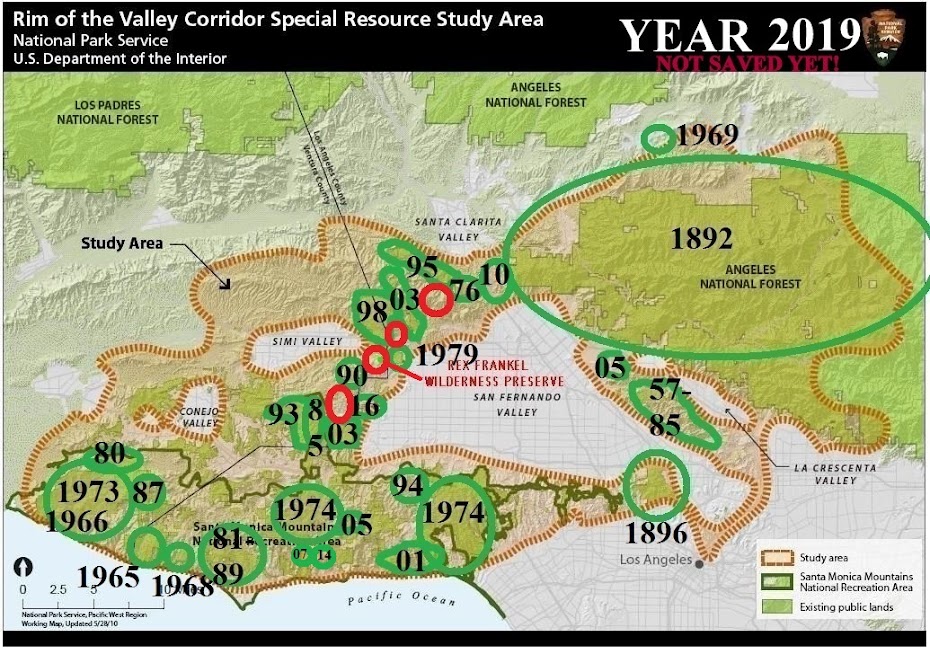
Conservationists have hailed the deals, involving $17.2 million in public money, as a rare opportunity to link protected mountain land with the coast without negotiating parcel by parcel and without lengthy legal battles. Sandwiched on nearly all sides by local, state or federal property, the canyon fits like a missing puzzle piece in the patchwork effort to preserve wildlife corridors in the Santa Monica Mountains.

But the deals have left some pondering whether state agencies paid a premium for land that was in no imminent danger of development.

"People all day long threaten development, but a threat doesn't mean anything if there's no way of actually getting a development on a property," said David Myers, executive director of the Wildlands Conservancy.

Good investor

Sweeney said he was doing what any good real estate investor would do with property. "When I buy a piece of land, I see what the law allows you to do with it," he said. "I'm really trying to add something of value to the property and getting it in a position where you can sell it -- because you don't know if the state's going to buy it. Who knows if the money is going to run out tomorrow? You'd be waiting forever."

Sweeney bought much of the rugged canyon land through his Denver-based company, Malibu Ocean Ranches LLC, and transferred parcels among four other limited liability companies that he helps manage.

Because no two adjacent lots belonged to the same owner, each was treated separately and did not get the scrutiny that would come with a multi-parcel development.

Los Angeles County Planning Department and California Coastal Commission records show Sweeney made four lot-line adjustments and acquired a 60-foot-wide easement for road access. He also obtained certificates of compliance, required before development, and was given the go-ahead to build five single-family residences. Sweeney received permits to remove at least 30 oak trees.

What looked like a canyon divided among various owners, upon closer scrutiny, started to look like a major development.

"The issue is: can you build in such a pattern that is really environmentally destructive, putting these paths in, roads every which way, without taking a look at the whole thing?" said Joseph T. Edmiston, executive director of the Santa Monica Mountains Conservancy, which will help preserve the southern property. "You can't do bits and pieces and put it all together and say, 'Voila!' you have this big project. Well, under state law you can now."

Sweeney is well-known among conservationists and government officials. Legislators in 2001 tightened rules governing lot-line adjustments partly in response to his activities on coastal land farther north. Environmentalists thought he could not do anything similar this time around.

"Well, it turns out that it was, unfortunately, easier than anyone thought," Edmiston said.

The Corral Canyon properties, located in a coastal zone, require Coastal Commission review before bulldozers can break ground. The task of processing and approving so many parcels for residential development takes years and can lead to protracted legal battles.

"The dirty work is not getting the certificate of compliance or lot-line adjustments; that's the easy part of it," said Gina Natoli, a supervising regional planner at the county's Department of Regional Planning. "The hard part is developing, that's what takes a lot of time."

A private firm last summer appraised Sweeney's re-jiggered parcels at $24.6 million, based on comparable property sales.

The Trust for Public Land, a nonprofit land conservation organization, helped broker the deal and contracted the appraisal. It optioned the property, then approached the Mountains Recreation and Conservation Authority, which applied for state funds.

On Dec. 28, Sweeney sold the lower 626 acres to the Trust for Public Land for about $12.6 million, according to the trust, more than double what he paid for it but well under the appraised value. The difference can be claimed as a tax write-off.

State law does not require the trust or Sweeney to reveal the option price of the transaction.

The trust sold about half the acreage to the Mountains Recreation and Conservation Authority, a local partner of the Santa Monica Mountains Conservancy, for $6.5 million. Portions of the land are expected to be sold to the authority this week and by the end of the summer. Sweeney plans to sell the remaining 199 acres to the Trust for Public Land by the end of this summer. The trust then plans to sell that land to California State Parks. Not included in the acreage is a parcel that will be donated to the Mountains Recreation and Conservation Authority.

The use of an intermediary to help broker the deal gives the government flexibility and time to come up with funding to help pay for the land, according to those familiar with such transactions. But some also find the practice too opaque.

"The problem is the way these groups operate," Myers said. "They say these appraisals are privileged information. You can't see it until the deal is done. But if it's public money you should have a right to see the appraisal . . . and look at the comps and see if there are comparables of equal lands with equal worth."

A report by the Legislative Analyst's Office released in October criticized the lack of objectivity and transparency in the appraisals for land acquisition deals involving the state.

Since 2000, California voters have approved more than $22 billion in bond money to be used to acquire land for natural-resource protection and parks. The Corral Canyon land will be paid for mostly by money from Proposition 50, approved in 2002, and Proposition 84, approved in 2006.

Bill Fulton, president of the Ventura-based land-use policy firm Solimar Research Group, said there is no "ideal solution" to the way private lands are purchased with public funds: Government and public agencies move much more slowly than private individuals. Although the taxpayer may pay a higher price, "everything's a trade-off," he said.

Lack of funding

A report released today by the National Parks Conservation Assn. found that about 1,300 privately held acres in the Santa Monica Mountains National Recreation Area are developed each year, and a severe lack of federal funding over the last eight years has kept the National Park Service from preserving 25,000 acres in the mountains designated as key for recreation and habitat connectivity.

"The end result might be no land conservation at all," Fulton said. "If you compare [this method] to the ideal of the government buying the land, it's less than ideal. If you compare it to the very real alternative -- in many of these cases, that the land gets developed even though the public interest is to conserve it -- then it doesn't look so bad. It's a necessary way of doing business sometimes."

The canyon, a watershed with a year-round stream that flows into Santa Monica Bay, has been atop the state and the local conservancy's priority list for decades. The land winds up past Corral Canyon Park on the Pacific Coast Highway to Malibu Creek State Park. Deer, mountain lions, coyotes and bobcats roam the area, and despite last November's fire that swept through 70% of the canyon, stands of oak trees, coastal sage scrub and chaparral subsist, sprouting through the ash.

In the early 1990s, the conservancy tried to buy 1,100 acres in the canyon from then-owner Ernest Auerbach for $11 million, but the money never materialized. In 2000, amid a real estate recession, Sweeney bought nearly half of Auerbach's acreage for about $1.8 million.

"I don't want to walk away from this a second time," said Los Angeles County Supervisor Zev Yaroslavsky. "As distasteful as this is, and as infuriating as it is, it's a deal we have to make."

Sweeney, 47, said he has not bought new property since 2002 and has sold 1,725 of his total 3,000 acres in the Santa Monica Mountains to about 40 private buyers (not including the Corral deal).

Sweeney has been a party with the Trust for Public Land on at least three other preservation deals farther up the California coast in which he has reaped millions of dollars in profit: Bixby Ranch, Sand Hill Bluff, and Coast Dairies.

His remaining large properties, Ramirez Canyon and Malibu Creek, are being discussed for purchase by TPL and state and federal agencies.

"I've really slowed down in my real estate acquisitions," Sweeney said. "I don't think I'd be nearly as aggressive as I had been in the past. Before I got married, I was keen on buying as much of California as I could, but after . . . I've kind of got different priorities."

Sweeney said his development history was limited to "medical centers in strip malls" when he lived in Toronto, and an office building in Denver.

"I think I'm going to go back into that; there's not great opportunities in land investment," he said. "I've had a lot of great parcels . . . but it takes a different mind set . . . and oversight is ridiculous."
Oil firm, foes strike major deal on Santa Barbara Coast; to donate 3900 acres of land for preservation if they can tap offshore oil from existing platform


Oil company
Rich Reid
EYESORE: A gas processing plant owned by PXP, shown at center above U.S. Highway 101 on the scenic Gaviota coast, would be shut down by 2017 and given to a public land trust under the deal.
Texas-based company would halt production off Santa Barbara decades early so it can drill this year while prices are high. Pristine land would be protected.
By Kenneth R. Weiss, Los Angeles Times Staff Writer
April 11, 2008
Offshore oil deal
Offshore oil deal

April 11, 2008


A Houston oil company has agreed to shut down its offshore oil production off Santa Barbara County decades early in exchange for approval this year to drill into untapped undersea reserves and cash in on the nation's record oil prices.

To sweeten the deal, Plains Exploration & Production Co. -- known as PXP -- also has agreed to donate about 200 acres of oceanview property along the sparsely populated Gaviota coast and an additional 3,700 acres in Santa Barbara's premier wine-growing region for public parkland. It would withdraw a proposed housing development on that land and pay millions to fund projects that offset carbon dioxide emissions, such as low-emission public buses.

The unprecedented deal, announced Thursday by PXP and its fiercest environmental opponents, was designed to make a long-stalled drilling proposal more palatable to county and state officials in an area where a 1969 oil spill helped launch the modern environmental movement in California.

"It's hard for me to imagine that they won't approve this," said Linda Krop, chief counsel of the Santa Barbara-based Environmental Defense Center. Negotiations among these adversaries, she said, resulted in more concessions from PXP than any state or local agency could ever muster.

Steve Rusch, a PXP vice president, said the company was willing to make concessions because it wanted to do more than simply neutralize offshore oil's traditional opponents -- it wanted to enlist their support. Since the 1980s, most offshore oil development in California has been met with fierce opposition, including protracted litigation, congressional moratoriums and bureaucratic delays.

So beginning later this month, Krop and her clients will support PXP in its petition to use "slant drilling" from one of its four offshore platforms to tap into an undersea oil field, the Tranquillon Ridge, that could yield as much as 200 million barrels of oil and 50 billion cubic feet of natural gas.

It will be the first time in 39 years that one group, Get Oil Out, or GOO, has supported oil drilling. The group was formed by Santa Barbara County residents horrified by the gooey crude that coated their beaches after the 1969 offshore platform blowout.

Abe Powell, president of GOO, said it took "blood, sweat and tears" for his board members to abandon their historic role.

"Once we realized that we had put together a good deal for the community, we got it together," he said.

PXP wants to drill 22 wells using slant-drilling technology from platform Irene, which is 4.7 miles from shore, outside the three-mile limit of state waters. These wells would burrow on average 3,000 to 5,000 feet into the seafloor and reach as far as five miles from the platform to tap the reserves beneath submerged state lands.

Existing pipelines from platform Irene would transport the oil to processing facilities onshore, greatly reducing the risk of problems.

The agreement must win approval from county officials, the State Lands Commission, the California Coastal Commission and the federal Minerals Management Service, part of the Department of the Interior. It's a deal Rusch hopes will fall quickly into place so the company can begin sinking wells before the end of the year.

"There's an urgency to get on it as fast as possible," Rusch said, noting the surge in oil imports and the agreed-upon 14-year deadline for abandoning PXP's operations. In the highly speculative oil business, he said, PXP could drain this field in eight years or leave the oil in place. Right now, he said, it's hard to tell. "We hope to get as much as we can out of it."

Light, sweet crude for May delivery fell 45 cents to $110.42 in electronic trading Thursday on the New York Mercantile Exchange.

That's about four times the price of crude when Santa Barbara County rejected a similar drilling proposal from Nuevo Energy Co. in 2002. Environmental groups opposed the project, arguing that it would extend the life of offshore oil platforms in the Santa Barbara Channel, which are rarely disassembled.

Nuevo, like many oil companies, grew frustrated with its inability to develop offshore energy and sold platform Irene, its onshore oil processing facilities and its offshore lease to PXP in 2004. PXP had already acquired three other platforms off Point Arguello from Chevron and Texaco in 1999.

When Rusch learned that the objections to slant drilling focused on extending the life of offshore platforms, he approached Krop with the idea of setting a deadline to pull out. The sides spent months hammering out the details, including how to make such an agreement enforceable.

Under the terms, PXP would shut down its three platforms off Point Arguello by 2017, as well as its Gaviota gas processing plant. Five years later, platform Irene would also be closed, and removal would begin.

PXP has forged a separate agreement with the Trust for Public Land, a nonprofit land conservancy, that would help convert the donated acreage into parkland. The trust has spent the last dozen years trying to preserve sections of the Gaviota coast, a 40-mile stretch of pristine beaches, dramatic bluffs and terraced grasslands that marks the end of hundreds of miles of virtually uninterrupted sprawl extending from San Diego.

Under the agreement, PXP in the next two years would give the trust two large parcels, or about 148 acres, near Gaviota State Park.

It also would transfer to the trust about 1,000 acres north of Lompoc in La Purisima Hills and withdraw a proposal to develop a 1,100-home subdivision there.

After wrapping up oil production off Point Arguello in 2017, PXP would begin to restore an additional 56 acres on the Gaviota coast now used as a gas processing plant, and eventually turn that over to the trust.

It would also hand over 2,727 acres surrounding its oil production facilities near Lompoc after closing them in 2022.

All told, the donated land would total 3,931 acres.

The industrial facilities, which can be seen on the drive up scenic U.S. 101 just before the highway veers inland, have long been an eyesore in an otherwise unobstructed coastal view, said Steve Dunn, president of the Citizens Planning Assn. of Santa Barbara.

"The Gaviota facility was built in the early 20th century," he said. "Now we have an end date and plan to return it to a natural state. The Lompoc facility has been a thorn in our side and we look forward to that facility's end date. These are really big deals for us."

Debra Geiler, the trust's Southern California director, said the total value of the donated land could range from $50 million to more than $100 million.

More important, she said, the parcels are strategically located in a patchwork of private properties between public beaches and parks.

"This is one of the West's most threatened landscapes," Geiler said. "It's a particularly important landscape because of the nature of the geography," a place where the coastline shifts direction to east-west and warm and cold ocean currents collide, helping create a climate that supports an unusual diversity of wildlife.

Rep. Lois Capps, a Democrat who represents Santa Barbara in Congress, praised the "unique partnership" that has taken steps toward "ending a significant amount of oil and gas drilling along the Central Coast."

Lt. Gov. John Garamendi, a member of the State Land Commission, called it "a very complex and far-reaching agreement that would end oil drilling off the north Santa Barbara coast."

Tuesday, April 8, 2008

Pacific Lumber Bankruptcy Hearings: Creditors Don't Like Clearcutter Management's Plans; Most of Local Environmentalists, Elected Officials and Press Support Takeover by Mendocino Redwoods Co---owned by the family behind the Gap stores; Clearcutters Lose $72 million Lawsuit Against the Feds


Scotia's uncertain future weighs on residents
http://www.times-standard.com/localnews/ci_8848509
Times-Standard - Eureka,CA,USA 4-8-08 But the company in question -- Pacific Lumber Co. -- is now mired in debt, with creditors and rival companies fighting over the remaining pieces this week ...

EPIC urges backing for MRC's Palco plan
http://www.times-standard.com/opinion/ci_8821042 Times-Standard - Eureka,CA,USA 4-5-08 The Environmental Protection Information Center (EPIC) has battled Pacific Lumber since the venerable North Coast timber company's takeover by the ...

California Governor Backs Plan for PALCO Lands that Promotes ... All American Patriots (press release) - Taeby,NA,Sweden 4-4-08 The United States and the people of California have a vested interest in a successful reorganization of a Pacific Lumber Company that will result in sound ...
http://www.allamericanpatriots.com/48745385_california-governor-backs-plan-palco-lands-promote

A win for redwoods San Francisco Chronicle - CA, USA 4-7-08
http://www.sfgate.com/cgi-bin/article.cgi?f=/c/a/2008/04/06/EDAD100B2F.DTL Arnold Schwarzenegger is sending the right message to a Texas bankruptcy court considering the fate of Pacific Lumber: It's time to remove a corporate ...

Wilson misleading about MRC's Palco planTimes-Standard - Eureka,CA,USA 4-3-08
http://www.times-standard.com/opinion/ci_8793250
All of these are estimates due to the difficulty of getting reliable information from Pacific Lumber Co. Governor Wilson may assert, the success of the ...

Rodoni applauds Governor Arnold Schwarzenegger’s MRC endorsementThe Eureka Reporter - Eureka,CA,USA 4-6-08
http://eurekareporter.com/article/080406-rodoni-applauds-governor-arnold-schwarzeneggers-mrc-endorsement
Mike Thompson are endorsing the Mendocino Redwoods Company and Marathon Structured Finance Fund Plan for Pacific Lumber Co.’s reorganization to lead the ...


Conservation, jobs and the environmentSan Francisco Chronicle - CA, USA 4-3-08
http://www.sfgate.com/cgi-bin/article.cgi?f=/c/a/2008/04/02/EDAEVUPTV.DTL
Beginning next week, a US Bankruptcy Court in Corpus Christi, Texas, will review the five competing plans for the future of Pacific Lumber Co., ...

Governor, Thompson back MRC planTimes-Standard - Eureka,CA,USA 4-5-08
http://www.times-standard.com/ci_8821009
Arnold Schwarzenegger on Friday issued a statement of support for the Pacific Lumber Co. reorganization plan proposed by Marathon Structured Finance Fund ...

5th Circuit sets aside $72 million judgment for HurwitzHouston Chronicle - United States 4-4-08 http://www.chron.com/disp/story.mpl/headline/biz/5674890.html
Hurwitz said it was a Clinton administration scheme to pressure Pacific Lumber to give up 5000 acres of redwood forests in Northern California. ...

MAXXAM loses $46.9 million in 2007The Eureka Reporter - Eureka,CA,USA 4-3-08
http://eurekareporter.com/article/080403-maxxam-loses-469-million-in-2007
By NATHAN RUSHTON, The Eureka Reporter Just days ahead of the court proceeding to resolve Pacific Lumber Co.’s bankruptcy, its parent company, MAXXAM Inc., ...

Palco case plods onwardTimes-Standard - Eureka,CA,USA 4-1-08
http://www.times-standard.com/ci_8767237
The Pacific Lumber Co. and its creditors will jockey for position today as its bankruptcy enters what may be its final stage. ...

GREEN JOBS AND THE ENVIRONMENTBy Mark Golding - The Arts & Crafts Home(Mark Golding - The Arts & Crafts Home) 4-3-08
http://www.achome.co.uk/theorganichome/blogs/jobs/2008/04/green-jobs-and-environment.html
Beginning next week, a US Bankruptcy Court in Corpus Christi, Texas, will review the five competing plans for the future of Pacific Lumber Co., Scotia Pacific and, in a larger sense, the North Coast economy. ...

Scotia gets funds to buy its school from PalcoTimes-Standard - Eureka,CA,USA 4-3-08
http://www.times-standard.com/ci_8793252
... school district in California to be privately owned by a company, will finally be able to purchase its school site from the bankrupt Pacific Lumber Co. ...

Across the river and into the trees: North Coast timber saga again ...Capitol Weekly - Sacramento,CA,USA 4-3-08 http://www.capitolweekly.net/article.php?issueId=x0o06zi0f40j1i&xid=x0o0mavydw0jfp&_adctlid=v%7Cjq2q43wvsl855o%7Cx0o15tyliysk1z
In the end, financial reverses forced Pacific Lumber, unable to make payments on $714 million worth of bonds that included debt dating from the company's

Which plan for the future of Pacific Lumber Co. ? Redwoods at riskSan Francisco Chronicle - CA, USA 4-3-08
http://www.sfgate.com/cgi-bin/article.cgi?f=/c/a/2008/04/02/EDAEVUPSF.DTL
Humboldt County's Pacific Lumber Co. was hijacked 22 years ago by corporate raiders who liquidated much of the company's storied redwood forest and drove ...

AROUND THE REGIONHouston Chronicle - United States 4-2-08
http://www.chron.com/disp/story.mpl/business/5670248.html
Since January 2007, Maxxam's largest business, Pacific Lumber Co., has been in bankruptcy, and its results have not been included in Maxxam's reports. ...

PALCO bankruptcy finale on track to start next week The Eureka Reporter - Eureka, CA, USA 4-1-08
http://eurekareporter.com/article/080401-palco-bankruptcy-finale-on-track-to-start-soon
By NATHAN RUSHTON, The Eureka Reporter Lawyers in the Pacific Lumber Co. bankruptcy hashed out several issues in a hearing Tuesday, just one week ahead of ...


Judge critical of Pacific Lumber bankruptcy plan Houston Chronicle - United States 4-1-08
http://www.chron.com/disp/story.mpl/business/5665583.html
The judge overseeing the bankruptcy of Pacific Lumber Co., the timber unit of Houston-based Maxxam, said he plans to reject two of the company's three ...

Indenture Trustee plan best for Palco Times-Standard - Eureka,CA,USA 4-1-08 by Pete Wilson
http://www.times-standard.com/opinion/ci_8767225
A United States Bankruptcy Court is reviewing plans to determine the future of the Pacific Lumber Co., Scotia Pacific, and possibly the economic stability ...

PERSONAL PERSPECTIVE Woodsman, spare that politician San Francisco Chronicle - CA, USA 3-31-08
http://www.sfgate.com/cgi-bin/article.cgi?f=/c/a/2008/03/30/EDITVS8U5.DTL
These lofty figures are players in the near-billion-dollar bankruptcy of the world's largest redwood company, Pacific Lumber. The case has dragged on for a ...


Election brings out hypocrisy By Heraldo 3-30-08 http://humboldtherald.wordpress.com/2008/03/30/election-brings-out-hypocrisy/
“The prosperous and sustainable future of Pacific Lumber Co.’s timberlands, lumber mill, employees and town of Scotia is one of the most important economic and cultural assets of my district,” Rodoni said. “I will do everything in my ...


Mendocino/Marathon have the best plan Times-Standard - Eureka,CA,USA 3-30-08
http://www.times-standard.com/opinion/ci_8747640
The Pacific Lumber bankruptcy case is a complicated one, with many stakeholders elbowing each other to get the nod from the federal bankruptcy judge in ...

Rodoni gives input to state on PALCO bankruptcy The Eureka Reporter - Eureka,CA,USA 3-30-08
http://eurekareporter.com/article/080330-rodoni-gives-input-to-state-on-palco-bankruptcy
“The prosperous and sustainable future of Pacific Lumber Co.’s timberlands, lumber mill, employees and town of Scotia is one of the most important economic ...

Bankruptcy court holds fate of Headwaters land Sacramento Bee - CA, USA 3-30-08
http://www.sacbee.com/110/story/820227.html
At issue will be three competing plans for resolving creditors' claims against two affiliates of Maxxam Inc., Pacific Lumber Co. and Scotia Pacific Co., ...

Former Governor Pete Wilson to lead SCOPAC reorganization The Eureka Reporter - Eureka,CA,USA 3-27-08
http://eurekareporter.com/article/080327-pete-wilson-to-lead-scopac-reorganization
Consultants for the Indenture Trustee representing the Timber Noteholder group, which is owed nearly $800 million by Pacific Lumber Co. ...

The NCJ Wrap By japhetweeks 3-27-08
http://ncjournal.wordpress.com/2008/03/27/the-ncj-wrap/
In the Town Dandy, the NCJ’s Great Helmsman shares the paper’s rationale for how it voted in the Pacific Lumber bankruptcy claim. After seriously mulling over the advise of readers, the Journal finally went with its gut and “pulled the ...

The $85 Question North Coast Journal - Arcata,CA,USA 3-27-08
http://www.northcoastjournal.com/032708/towndandy0327.html
Small potatoes when set next to the billion-odd dollars of total debt carried on the books of Pacific Lumber and its various sister companies, ...

After years in the woods, Fish and Game has come to town with a ... North Coast Journal - Arcata,CA,USA 3-27-08
http://www.northcoastjournal.com/032708/cover0327.html
"Everybody here worked in timber," Leppig says, adding he spent six years on Pacific Lumber Co.'s habitat conservation plan. "Well, what we realized was, ...

Former Governor Wilson Selected to Manage Scotia Pacific ... Business Wire (press release) - San Francisco,CA,USA 3-27-08
http://www.businesswire.com/portal/site/google/?ndmViewId=news_view&newsId=20080327006038&newsLang=en
Scotia Pacific is a successor to Pacific Lumber Company. Following completion of the Headwaters Agreement, Pacific Lumber’s parent company—Maxxam—created ...

Former Gov. Wilson to lead Palco creditors' plan Times-Standard - Eureka,CA,USAPete Wilson has signed on to guide the reorganization of the Pacific Lumber Co.'s timber-holding subsidiary if a creditors' plan is approved in April by the ...

Mr. Rodoni goes to Sacramento By Heraldo 3-26-08
http://humboldtherald.wordpress.com/2008/03/26/mr-rodoni-goes-to-sacramento/
Supervisor Roger Rodoni went to Sacramento last week for a presentation of reorganization plans submitted in the Pacific Lumber bankruptcy case. The presentation was attended by parties involved in the 1999 Headwaters Agreement. ...

Election Roundup Times-Standard - Eureka,CA,USA 3-25-08
http://www.times-standard.com/ci_8694239
Second District Supervisor Roger Rodoni was among several government officials in Sacramento March 19 to hear from Pacific Lumber Co. bankruptcy plan ...

Who says Treesitting doesn't work? By XANTAR!!!!!(HUMBOLDT FOREST DEFENSE) 3-24-08
http://humboldtforestdefense.blogspot.com/2008/03/who-says-treesitting-doesnt-work.html
Apparently, Pacific Lumber missed the boat to refile the "Bonanza" THP, home of "Spooner" and the Nanning Creek Treesit village. Pacific Lumber was required to file an extension on THP#1-05-097 by mid-March 2008 in order to continue ...

Mendo Redwood woos Fortuna on Palco Willits News - Willits,CA,USA 3-16-08
http://www.willitsnews.com/ci_8592082?source=most_viewed
The company's chairman, Sandy Dean, walked a crowd of about 150 through the company's proposal to reorganize the bankrupt Pacific Lumber Co. ...

LA meetuphikes.org

E-Mail the editor:

rexfrankel at yahoo.com

Blog Archive

Quick-Search of Subjects on the Site